Fake Nostalgia
Internet Art Works Library | NS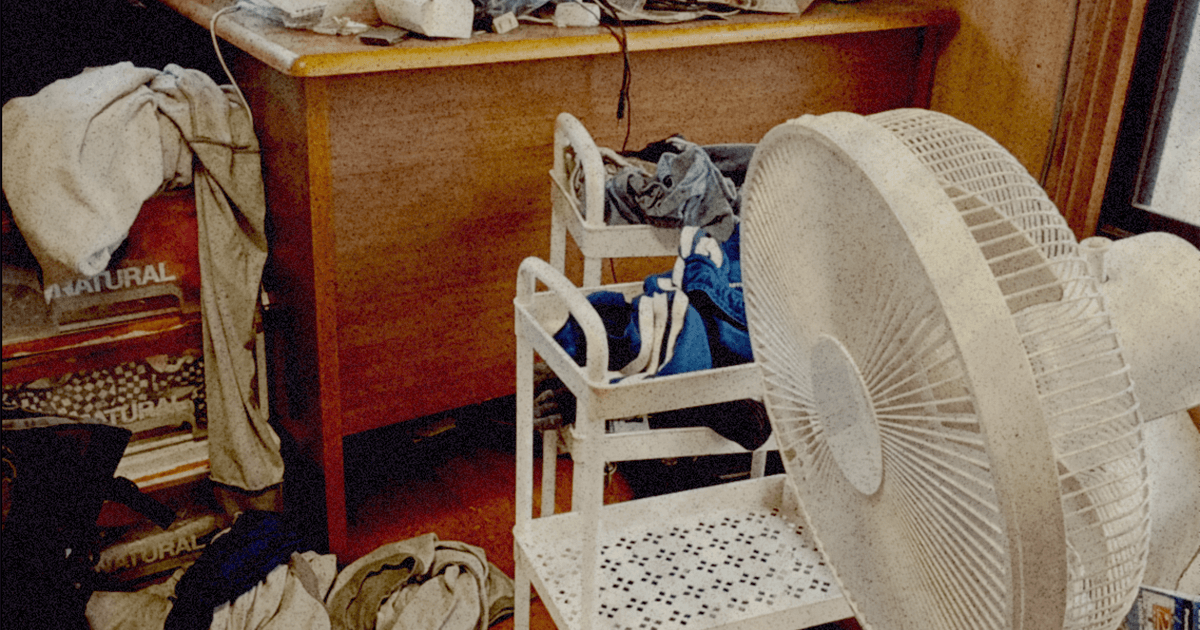
Fake Nostalgia
Work created in 2025/12/13
'Fake Nostalgia' is not a device that merely converts footage shot with a digital camera into something retro-looking. Its essence is far more cunning and critical. While the camera is active, the system continuously captures multiple still images automatically. When the viewer presses the shutter button, what is recorded is not 'that moment' but a frame randomly chosen from the many moments that have already passed.
This deliberately and cruelly enacts a fundamental problem of photography—the impossibility of the 'decisive moment.' The viewer presses the shutter, convinced that 'this is it!' Yet what is captured is an unintended past instant, disconnected from their intention. The work mercilessly betrays the illusion of perfect synchronization that digital technology once promised.
Henri Cartier-Bresson's notion of the 'moment décisif' refers to that miraculous instant when a photographer’s intention aligns perfectly with the world’s state. What 'Fake Nostalgia' presents is its exact opposite. Here, the photographer’s intention is inevitably betrayed. The act of pressing the shutter no longer 'selects' a moment; it merely endorses the system’s random choice.
This mechanism is not a mere technical trick—it carries deep criticality. It exposes the issue of 'selection' within memory and history. What we remember as 'the past' is only a selection from countless moments, filtered through particular criteria. Such selections are often arbitrary, power-laden, and ideological.
Even more critical is the fact that this selection is 'random.' Randomness may appear neutral and fair, but in reality, it is one of the most violent modes of selection. It strips events of all meaning and intention, reducing them to mere chance.
The viewer tries to control their expression or posture, striving to capture a 'good moment.' But the system nullifies that effort. What is chosen are unintended gestures, unprepared postures—moments that are 'not now.' This experience becomes a symbolic reenactment of the individual's loss of control in contemporary society.
The irony lies in the fact that this uncontrollable randomness is wrapped in extremely precise technical simulation. ISO sensitivity, exposure, developer temperature, H&D characteristic curves—these parameters once symbolized the photographer’s control in analog photography. Through darkroom adjustments, one could inscribe intention into the image.
In 'Fake Nostalgia,' however, these parameters have become empty signs. No matter how meticulously they are tuned, the most fundamental element—'which moment is recorded'—is already predetermined by the system. The abundance of technical control merely decorates an underlying loss of agency.
This temporal manipulation extends beyond vision into sound. The 1970s-style music generated from image data (G minor, 71 BPM, Dorian mode, 'wistful-longing') assigns emotional weight to moments the viewer did not choose. Randomly selected instants are converted into 'meaningful memories' by means of music.
There are two operations at work here. First, the act of choosing which moment to record is taken away. Second, emotional value is algorithmically imposed upon that stolen moment. Viewers find themselves guided into feeling emotions precisely as the system designs—toward moments they never intended to choose.
This structure mirrors the mechanism of historical manipulation in populism. Political nostalgia arbitrarily 'selects' certain moments from the vastness of the past, presenting them as 'the great times.' Why those moments were chosen is never explained. They circulate simply as representations of 'better times.'
The 'great' era invoked by 'Make America Great Again' is deliberately vague—perhaps the 1950s, perhaps the 1980s. What matters is not factual history, but the emotion of 'greatness.' And, as 'Fake Nostalgia' demonstrates, that emotion is retroactively attached to the chosen moment.
Real history is continuous, complex, and full of contradictions. Populism, however, extracts specific instants from that flow, strips them of context, and injects them with emotion—just as this artwork extracts random stills from a continuous stream, wrapping them in film grain and 1970s sound textures.
What makes this work remarkable is its explicit exposure of the selection process, which is usually invisible. Social media platforms and news algorithms constantly choose what to show and what to remember, yet those choices remain hidden from users.
'Fake Nostalgia' refuses to conceal its randomness. It declares it as a feature—moments are chosen randomly, often against the user’s will. This self-reflexive stance elevates the work beyond technical experiment into critical practice.
The viewer experiences the disjunction between the moment they tried to choose and the one the system actually selected—and the emotional weight that is retroactively imposed upon that disjunction. It offers a bodily understanding of how our memories and historical perceptions are constructed through 'selection' and 'emotional assignment.'
Ultimately, 'Fake Nostalgia' embodies a political theory of time and memory as an interactive apparatus. It reveals that nostalgia is not a natural feeling but a technologically manufacturable one. It exposes the exercise of power inherent in every act of selecting the past. And above all, it acknowledges—in negative form—the existence of countless moments excluded from that selection.
Behind every recorded image lies a multitude of unrecorded ones. Behind every narrated history lie untold histories. Through the most everyday medium—the browser—'Fake Nostalgia' lets us experience that structural violence firsthand.
This is not mere aesthetic experimentation. It is a sharp, poetic, and relentless critique of how memory, history, and identity are constructed in the digital age. And, as its title suggests, by exposing and weaponizing its own fakery, 'Fake Nostalgia' achieves the most honest form of critical artistic practice.