Water Lilies
Internet Art Works Library | NS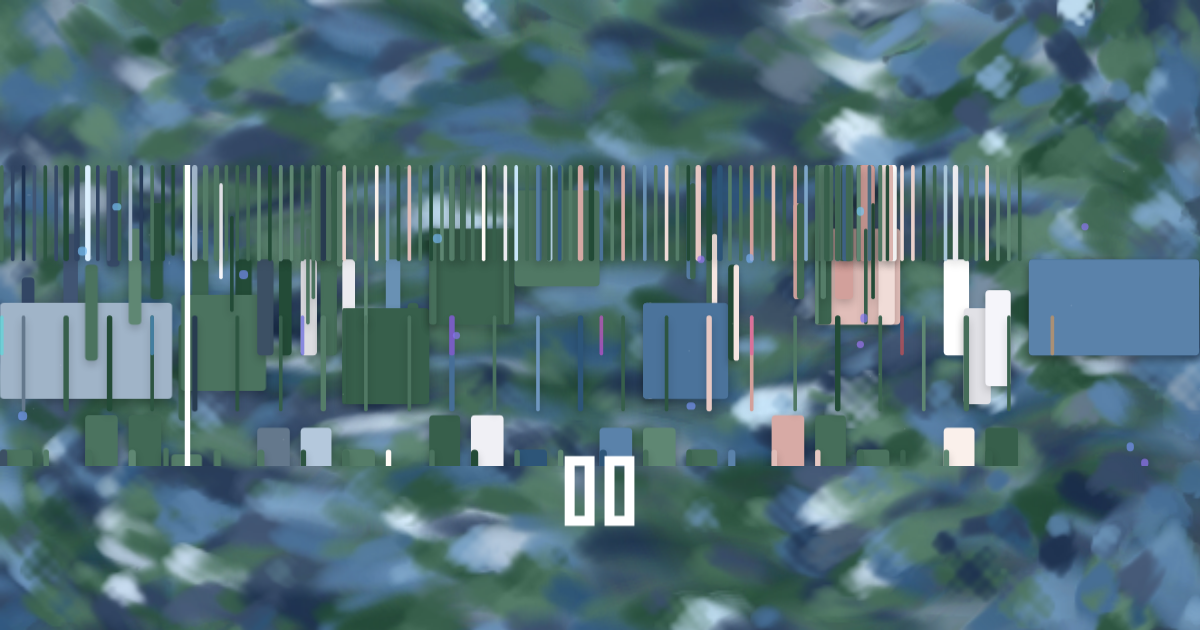
Water Lilies
Work created in 2025/7/12
This piece is an interactive internet art work inspired by Claude Monet’s series “Water Lilies.” It fuses a procedural music generation system—crafted with the WebAudio API and Tone.js—with organic visual expressions reminiscent of Impressionist brushwork, thereby creating a novel garden landscape within digital space.
At the heart of the work is the deliberate use of a low sampling rate, 22050Hz. This choice can be read as a conscious resistance to the high-resolution audio typical of modern digital environments. In practice, device limitations mean it runs at 48000Hz, but the tension between technical constraints and ideal intent gives the work a fascinating sense of unease. The musical structure, composed of 260 note elements, evokes the number of petals seen in Monet’s lilies, serving as an algorithmic reconstruction of nature’s complexity.
The blue-green organic shapes spreading across the screen replicate Impressionist techniques at the pixel level. Just as Monet captured shifting light with his brushstrokes, this work visualizes real-time generated sound data, representing the ever-changing reflections on water. A central, vertically aligned visualizer acts as a metaphor for garden bamboo fences or raindrops on the pond’s surface—bridging Eastern aesthetics and Monet’s Western Impressionism.
The simple interface, “generate and play music,” signifies a critical attitude toward overly designed modern UIs. The user chooses to enter the soundscape as if opening the gates to a garden, and the world, once opened, unfolds with a life of its own. As Monet’s garden revealed different expressions with the changing seasons and times, the piece embodies the beauty of temporality and change in the digital realm.
“Water Lilies” serves as a timeless stage for aesthetic dialogue, fusing late 19th-century Impressionist painting with 21st-century digital technology. The procedurally generated music digitally recreates the “eternity in a moment” Monet sought, allowing viewers and listeners to experience meditative tranquility within the digital garden. By leveraging technical limitations as an expressive device, this work proposes new aesthetic possibilities for digital art.
Ultimately, this piece poses philosophical questions beyond pure decoration in the realm of internet art: Is it possible to reproduce nature using digital technology? Does artificially generated beauty contain genuine poetic value? The answer quietly dissolves within the softly flowing sonic landscape.