Vine
Internet Art Works Library | NS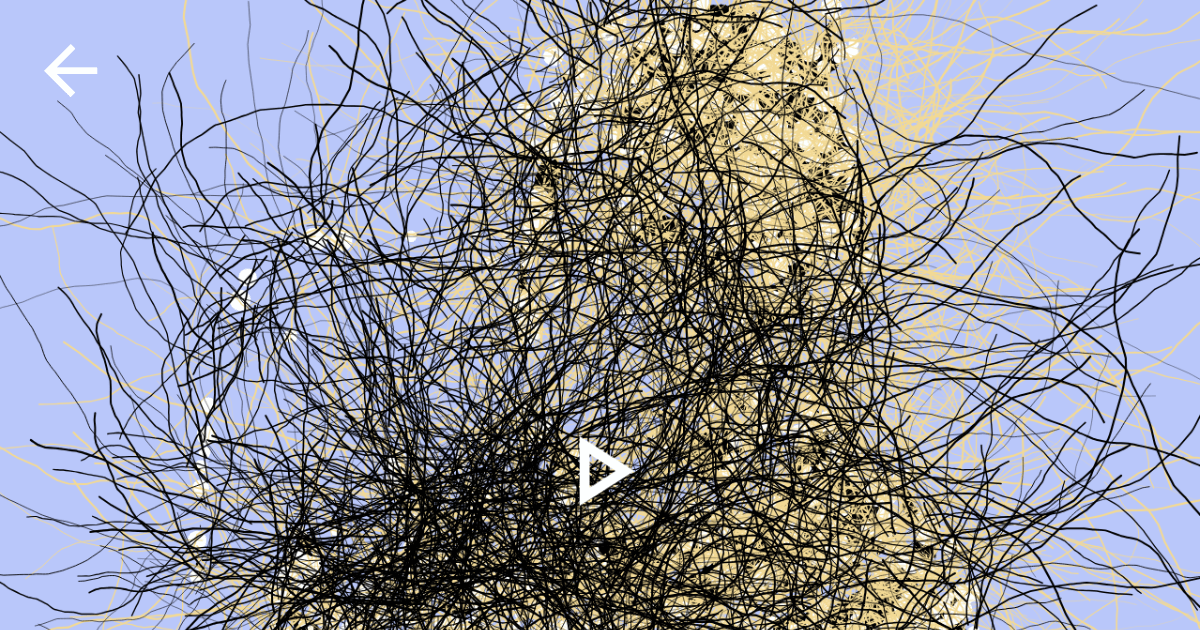
Vine
Work created in 2025/10/11
'Vine' is an internet-based generative artwork that visually and sonically transforms webcam-captured images.
At its core lies the act of 'translation' of image data. The photo taken by the user is instantly analyzed by an algorithm, and its pixel data is converted into vine-like visual structures. Around 3,000 'digital vines' are generated based on the brightness and edge information of the original image, forming new layers of visual texture.
What is intriguing is that this visual generation is not merely a visual transformation; it is also repurposed as a parameter for sound generation. The colored vines (about 1,800 of them) correspond to the melody line, while the black vines (about 1,350) form the bass line.
Attributes such as length, complexity, and width are converted into pitch, rhythm, and tempo. This data sonification, implemented with the Tone.js library, functions as an experimental translation across the sensory modalities of sight and hearing.
Yet a fundamental question underlies the work: is this transformation process an act of 'expression' or merely one of 'processing'? While the patterns and sounds produced by the algorithm reflect the data structure of the original image, the scope for the artist's intention or aesthetic judgment to intervene is limited. In this sense, the work can also be interpreted as an attempt to dismantle authorship by delegating the creative act to the algorithm itself.
The interaction design also deserves attention. Users are permitted only minimal actions — 'capture' and 'playback' — and can hardly intervene in the generative process. This passivity may critically mirror the mechanical loop of 'shoot → post → consume' that characterizes modern social media behavior.
The sound-generation algorithm demonstrates certain considerations of musical theory. These include scale selection (minor scale types), chord progression generation, and note-thinning processes (from 27,969 notes to 65), all implemented to maintain the form of a perceptible musical composition. However, such emphasis on 'listenability' simultaneously suppresses experimental intensity. A more radical approach could have been to directly sonify the pixel data without interpretation, but this work chooses to remain within a certain musical framework.
Visually, the vine-generation algorithm abstracts while preserving the structural characteristics of the original image, yet the aesthetic value of the visual outcome itself remains open to debate. The true significance of the work may instead lie in its 'systemic transparency' — its ability to make the transformation process itself visible and audible — rather than in the finished quality of its visuals or sounds.
'Vine' transforms a personal visual record (a photograph) into an impersonal sonic experience through algorithmic mediation. The critical dimension of this work resides in both what is lost and what is generated through that transformation. It intertwines, like proliferating vines, the possibilities and limitations of expression in the digital age.